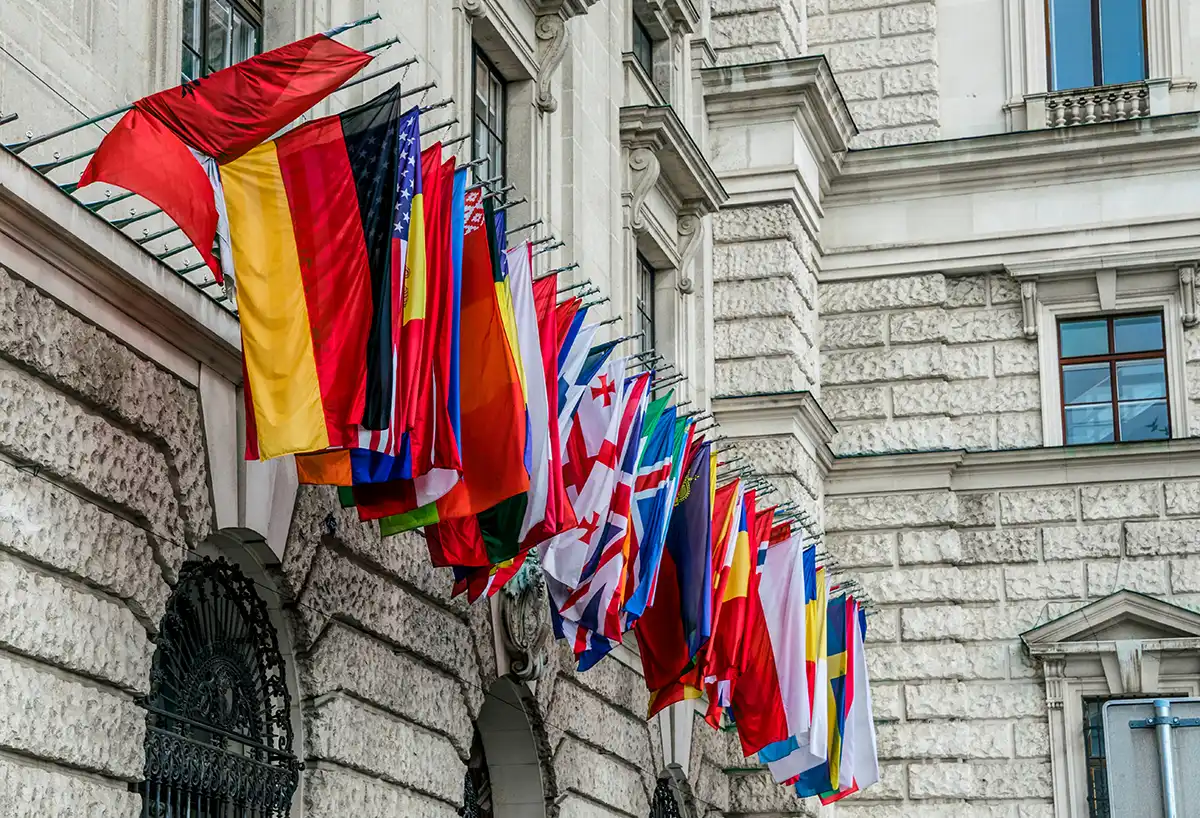
The Federal Republic of Nigeria runs one of Africa's largest diplomatic networks — roughly 100 embassies, high commissions and consulates worldwide. The Ministry of Foreign Affairs in Abuja is the institutional home of the Nigerian Foreign Service, and joining it through the Federal Civil Service Commission's competitive entry route means accepting a working life of three- to four-year postings, decided largely by the Ministry, across a network calibrated around Africa, the diaspora (one of the largest African-origin communities in the world), Commonwealth and ECOWAS engagement, and Nigeria's substantial bilateral and economic relationships in Europe, Asia and the Americas.
Most public conversation about this career fixates on the salary. That's understandable — Nigerian public-service pay is published, and the word "ambassador" carries enough weight in Nigerian political life that people expect the compensation to match. The reality is starker than for most major foreign services. Nigerian ambassador basic pay, even at the top of the Consolidated Diplomatic, Consular and Foreign Service Cadre Salary Structure (CONPSS), is modest by international standards. Allowances on postings abroad change the picture. But the most important part of the compensation never appears on any pay statement.
That gap between the public image and the actual answer is where the conversation gets useful for anyone seriously considering a Nigerian diplomatic career: what does a Nigerian diplomat actually earn, and which postings genuinely shape a Foreign Service career?
What a Nigerian diplomat actually earns
Nigerian Foreign Service pay is governed by the Consolidated Diplomatic, Consular and Foreign Service Cadre Salary Structure — CONPSS — within the federal public service. Entry-level Foreign Service Officers join at the lower CONPSS grades, with home-base monthly basic pay broadly in line with comparable middle-management federal civil service roles in Abuja. By international standards the figure is striking: even ambassadors, who fall at the highest grade levels of the CONPSS structure (GL 17 or equivalent), draw monthly basic pay in the range of roughly NGN 800,000 to NGN 1.2 million. In hard-currency terms that translates to a basic salary that sits well below what comparable senior diplomats in OECD foreign services receive — and well below what private-sector senior management commands in Lagos or Abuja.
What changes the picture on a posting abroad is the foreign-service allowance system. Cost-of-living adjustments for expensive posts, representation and entertainment allowances, hardship differentials, dependent-education provisions, and housing supplied or paid for substantially. Nigerian ambassadors abroad commonly take home in the range of NGN 2-5 million a month depending on the host country, with the most expensive and most difficult posts attracting allowances that change the financial reality significantly compared to the home-base basic figure.
But the most interesting compensation in a Nigerian diplomatic career never shows up on the CONPSS table or in the allowance schedule. The real "pay" is structural: a working life across five to seven countries, the experience of representing Africa's largest economy and most populous nation at the table where bilateral and multilateral decisions are made, the access to the substantial Nigerian diaspora across every continent, and the long-tail role in shaping how Africa positions itself in global affairs. That form of compensation explains, more than any grade level, which Nigerian Foreign Service postings are quietly fought over.
- Strategic weight of the country for Nigerian foreign-policy, trade, security and diaspora interests
- Visibility from Abuja — work read by the Minister of Foreign Affairs or the Presidency accelerates a career
- Diaspora intensity — posts with large Nigerian-origin communities (US, UK, Canada, Italy, Ghana, South Africa, UAE) carry disproportionate consular and political workload
- Quality of life on post: housing, schools, climate, medical access and family fit
- Hardship and security profile: harder posts attract foreign-service allowances at the top of the scale and disproportionate career-shaping value

Which Nigerian Foreign Service postings get fought over rarely comes down to base pay alone. Mandate, representation, diaspora intensity and operational pressure carry far more weight.
LIGHTFIELD STUDIOS / Adobe Stock
Nigeria-US relations run on trade, security cooperation, and one of the most successful African-origin diaspora communities in America — and Washington is the embassy that anchors it.
If there's a single Nigerian Foreign Service posting that signals seniority and substantive responsibility, it's the Embassy of Nigeria in Washington DC. The Nigerian-American community is one of the most economically and educationally successful immigrant groups in the United States, the bilateral political file covers a substantial security-cooperation agenda (counterterrorism, maritime security in the Gulf of Guinea), and the trade relationship — Nigeria has long been one of the United States' largest African trading partners — sits alongside it constantly.
What makes Washington demanding for a Nigerian diplomat is the visibility. The Embassy and its Consulates-General in New York and Atlanta carry a high-volume consular workload (passport renewals, civil-status work, document legalisation for tens of thousands of Nigerian-Americans per year), and the political file is read in Abuja at the Presidency level. The relationship with the United States structures much of how Nigeria is read internationally.
Inside the Nigerian MFA, Washington is one of the most career-defining tours available. The combination of file weight, diaspora intensity, and Washington's central role in international diplomacy makes a tour there reshape what comes next for an officer — well beyond what the CONPSS allowance schedule would suggest.
China is Nigeria's largest foreign investor under the Belt and Road Initiative — and Beijing is the embassy that runs the bilateral file at its centre.
The Embassy of Nigeria in Beijing runs the bilateral relationship with one of Nigeria's most consequential economic partners. China has financed and built major Nigerian infrastructure projects across rail (the Lagos-Ibadan railway, the Abuja-Kaduna line), ports, power, and urban development — much of it under the Belt and Road Initiative framework — and Chinese investment and trade flows into Nigeria sit alongside the wider Forum on China-Africa Cooperation (FOCAC) engagement that structures the relationship.
What makes Beijing demanding for a Nigerian diplomat is the operational complexity. The infrastructure financing relationship requires careful coordination with the Ministry of Finance and the relevant Nigerian agencies; the political file requires calibration as Africa's relationships with major powers shift; and consular work covers the substantial Nigerian community in China including students and traders. The operating environment in Beijing itself — air quality, the language barrier, the surveillance environment — adds its own daily friction.
For a Nigerian Foreign Service career, a Beijing tour is one of the most consequential commercial-and-political postings the network offers. The visibility from Abuja is high, and the file weight reshapes what comes next reliably across the rest of an officer's career.
Nigeria House on Northumberland Avenue runs a Commonwealth-anchored bilateral and the largest single Nigerian-origin community in Europe.
The Nigerian High Commission in London — Nigeria House on Northumberland Avenue, near Trafalgar Square — is the senior Nigerian Foreign Service post in Europe. The Nigerian-British community is the second-largest Nigerian-origin diaspora outside Africa (after the United States), the post-colonial historical relationship structures dense cultural and educational engagement, and the bilateral file covers substantial trade, security cooperation, and Commonwealth-related diplomacy through the United Kingdom.
What makes the London High Commission demanding for a Nigerian diplomat is the consular workload. Tens of thousands of British-Nigerians and Nigerian residents in the UK route routine consular work through the High Commission each year — passports, civil-status documentation, document legalisation, and visa work for travel to Nigeria. The political file runs alongside it: post-Brexit UK-Nigeria trade negotiations, Commonwealth and AfCFTA engagement, and the security-cooperation dimension.
Inside the MFA, London is one of the prestige postings of the network. The Commonwealth designation of High Commission does not change the underlying career reality — it functions for all practical purposes as an embassy, and a tour there compounds across a career.
Nigeria-South Africa is the continent's most operationally important bilateral relationship — and Pretoria is the post that runs it.
The Nigerian High Commission in Pretoria runs one of the most strategically important African bilateral relationships in the network. South Africa is the continent's other economic anchor — Nigeria is the largest economy by population and oil-based output; South Africa by industrial diversification — and the bilateral file covers African Union and Southern Africa coordination, substantial trade and investment in both directions (MTN, Multichoice, Standard Bank, Shoprite operate at scale in Nigeria; Dangote and Nigerian banking and telecoms have substantial South African footprints), and the African Continental Free Trade Area framework that has reshaped continental commerce since 2021.
What makes a Pretoria tour distinctive for a Nigerian diplomat is the operational density of the file. Pretoria coordinates with the Nigerian Consulate-General in Johannesburg on commercial and consular work, and the bilateral relationship requires constant calibration on continental policy questions — peace and security, AU reform, migration policy, and the wider African political file.
For a Nigerian Foreign Service career, Pretoria is one of the few continental postings that carries the same career weight as the prestige Anglosphere posts. Officers who have run the South African file are in demand for senior continental roles afterwards, and the High Commission is the kind of tour that re-orders a diplomat's career trajectory.
Accra hosts the ECOWAS Commission, and Nigeria is the bloc's largest economy and most populous member — Accra is the post where Nigeria's regional leadership plays out daily.
The Nigerian High Commission in Accra sits at the centre of Nigeria's regional engagement. Ghana hosts the ECOWAS Commission — the secretariat of the regional bloc Nigeria has anchored since independence — and the Nigeria-Ghana bilateral relationship is one of the densest intra-African flows. Trade, the substantial Nigerian community in Ghana, education exchanges in both directions, and the wider West African political file all sit on this post's desk.
What makes the Accra High Commission distinctive professionally is the ECOWAS dimension. Regional peace-and-security work (the bloc's role in democratic stability, in counterterrorism in the Sahel, and in standardisation of trade and movement frameworks) routes through Accra alongside the bilateral with Ghana. For Nigerian diplomats building a regional career profile, Accra is one of the formative West African tours — comparable in career-shaping weight to bilateral postings far larger by GDP.
The destination itself adds to the substance. Ghana is a country with which Nigeria shares not just an ECOWAS framework but a cultural ecosystem (Nollywood circulates in Ghana, Ghanaian music shapes Nigerian airwaves), an Anglophone-African political identity, and the kind of diplomatic working environment in which Nigerian-Ghanaian families and businesses move freely. The High Commission's appointment-only consular framework reflects the volume of that movement.
Embassy, high commission, consulate-general and honorary consulate are not the same Foreign Service career experience
Anyone considering the Nigerian Foreign Service should understand the difference between embassy, high commission, consulate-general and honorary consulate postings. Embassies and high commissions are operationally similar — the high-commission title is the Commonwealth convention for diplomatic representation between member states — and on the Nigerian MFA career path the work is comparable. Consulates-general focus on consular operations, trade promotion and regional engagement under a Consul-General. Honorary consulates are part-time appointments, typically held by a private citizen of the host country, and are not part of the MFA career path.
What changes with the type of mission is the work, the leadership responsibility, and the visibility from Abuja. An ambassadorial or High Commissioner role at a major mission combines political representation, the management of all sections, and direct interlocution with the host government. Heads of consular operations at a Consul-General level run citizen services and regional engagement — a different but equally substantive leadership track.
For anyone moving from general interest into concrete career planning, the page on the diplomatic career is a useful next stop.
Ministry of Foreign Affairs — Federal Republic of Nigeria
The official MFA portal. Nigeria's bilateral relationships, the network of embassies, high commissions and consulates worldwide, consular services, and the foreign-policy priorities under successive administrations.
Federal Civil Service Commission
The recruiting body for the Nigerian Foreign Service. Entry pathways, application requirements, and the broader civil-service framework that the CONPSS structure sits inside.
Foreign Service Academy
The training institution for Nigeria's Foreign Service Officers. The curriculum covers international relations, diplomatic practice, languages, and the institutional knowledge new entrants need before their first posting abroad.
ECOWAS Commission — Accra
Official site of the Economic Community of West African States. Nigeria's regional engagement is one of the structural pillars of its foreign policy, and ECOWAS is the institutional framework most Nigerian diplomats build careers around at some point.
“The real compensation in a Nigerian Foreign Service career doesn't appear on any CONPSS pay grade. It shows up in the places you've lived, the relationships you've built, and the question of which postings Foreign Service Officers actually compete for inside the MFA when the salary stops being the criterion.”
If the criterion is the bilateral relationship that carries the largest African-origin diaspora and one of the United States' most operationally important African files, Washington is the clearest case in this selection. If it's the post that runs Nigeria's most consequential foreign-investment relationship, Beijing is hard to overtake. If it's the Commonwealth-anchored European post with the second-largest Nigerian diaspora outside Africa, London earns its place. If it's the continental peer relationship that the rest of African foreign policy revolves around, Pretoria captures it. And if it's regional leadership through ECOWAS and the post that defines Nigeria's West African role, Accra is the High Commission this article cannot leave out.
Read this way, the question that started this article — what does a Nigerian ambassador earn — turns out to be the wrong frame. The right question is which postings a Nigerian Foreign Service Officer would actually fight for inside the MFA if CONPSS grade weren't the criterion. The real compensation in this career is not the monthly base; it's the sum of the places lived, the relationships built, and the rooms where, for a few years at a time, a Nigerian diplomat was the voice of Nigeria.